Journal
Rigid vs Chain Restraints: Which One Fits the Use?
Updated
Two pairs of steel cuffs can look almost identical in a listing and feel like different things entirely on the body. The difference is what runs between them: a chain, or a solid bar. It is the single decision that most changes how a restraint behaves, and it is worth understanding before you choose, because neither is simply "more" than the other — they do different jobs.
What a chain does
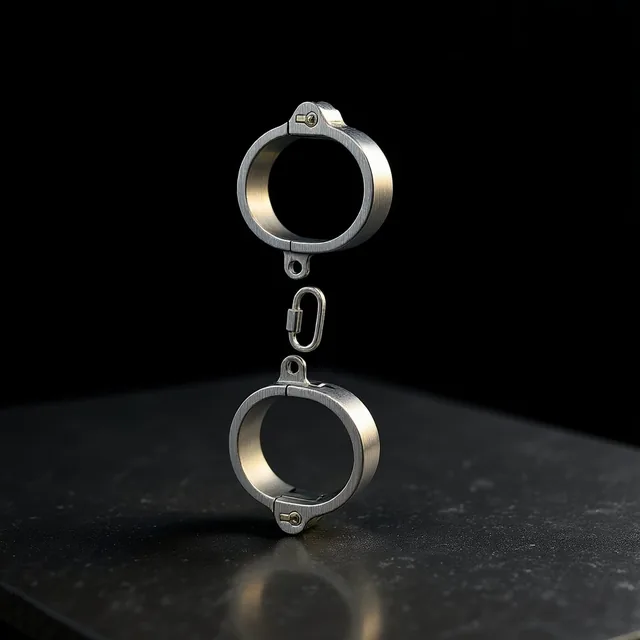
A chain links two cuffs while leaving each free to move independently. The hands or feet can come together, turn, and travel within the length of the chain. That freedom is the point: chain restraints are versatile, they pack flat, and they let you connect almost anything to anything — cuffs to a collar, cuffs to a bed, cuffs to each other. Our Duet chain set exists for exactly that, and the wrist pairs in most of our sets are chain-linked so the hands can still be used.
Chain is forgiving. It adapts to posture, it stows in a pocket, and it rarely forces anything. If you want restraint that still allows movement and improvisation, chain is the honest choice.
What a rigid bar does
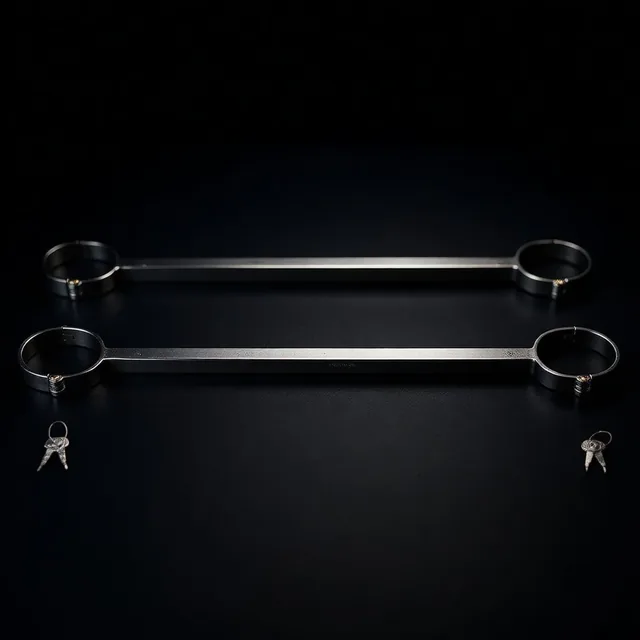
A rigid bar holds two cuffs a fixed distance apart and refuses to let that change. There is no drawing the ankles together, no bringing the wrists to the face, no slack to work with. What it fixes is not a limb but a posture — and a posture is harder to take back than a grip.
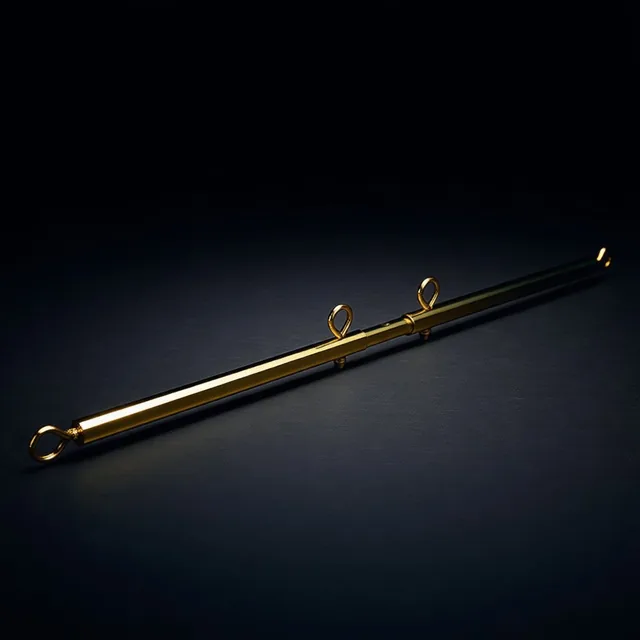
This is a different experience, not a stronger version of the same one. Our Oath ankle set runs a rigid bar where others use a chain, precisely so the stance stays set. A spreader bar is the same idea at limb scale: it decides a width and keeps it. And a yoke like the Pillory fixes the neck and both wrists to one frame at once — the most uncompromising form of the idea.
Weight is a third axis
Independent of chain or bar, there is sheer mass. A heavy chain shortens a stride by its own weight; thick-walled irons like the Anvil restrain by heft rather than geometry — five kilograms on the ankles that you simply cannot ignore. Weight and rigidity can combine: our heaviest connected set, the Leviathan, is both fixed and deliberately massive.
How to choose
- Want movement, versatility, packability? Chain. Start with cuffs plus the Duet set.
- Want a fixed stance that will not negotiate? Rigid — an ankle bar, a spreader, or a yoke.
- Want the restraint to be felt physically, by weight? Heavy irons, chained or not.
- Want all of it, once? A connected heavy set.
There is no single right answer, only the one that matches what you actually want the piece to do. Get that decision right and the rest — grade, finish, fit — falls into place around it.