Journal
How Heavy Are Leg Irons, Really?
Updated
"Heavy duty" is the most abused phrase in this category — it gets printed on nylon straps. If you are shopping for leg irons because you want weight, the useful move is to ignore the phrase and look for a published figure in grams. Here is what our own figures mean.
The ranges, and what they feel like
These are our own figures, from our own range, because they are the ones we can stand behind.
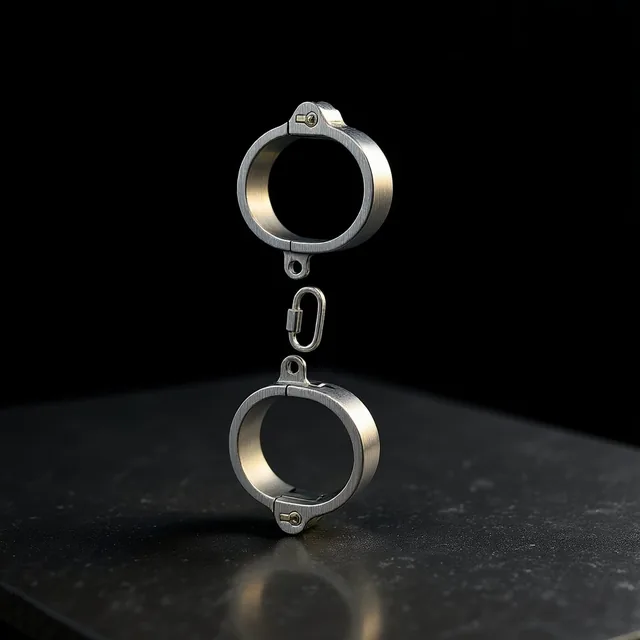
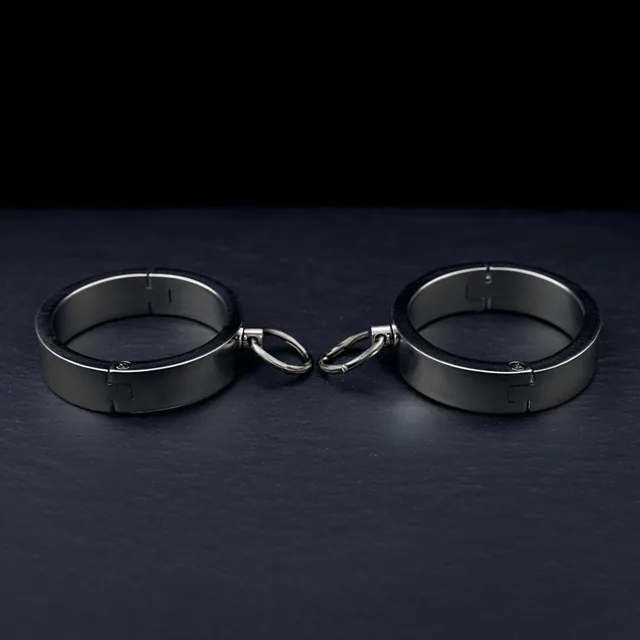
Around 0.6 kg the pair. Our Ballast bands are ≈0.6 kg (women's) / 0.65 kg (men's) across the pair — a 7 mm wall on a 2 cm band, each band independent with its own ring. Enough to be aware of with every step.
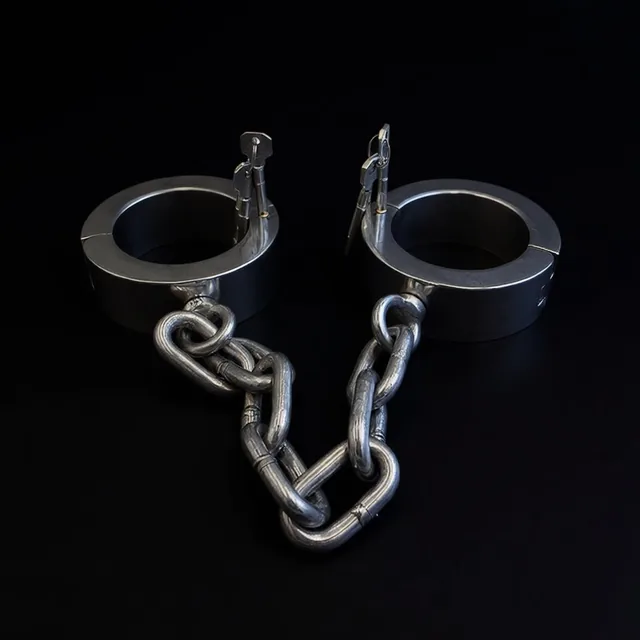
Around 5 kg the pair. The Anvil irons are roughly 4.65 kg (women's) to 5.0 kg (men's) — a 2 cm wall on a 4 cm band. At this mass the restraint is the weight, and standing still becomes its own experience because the ankles never stop reporting.
Plenty of what is sold as heavy-duty is lighter than either of ours and restrains by geometry rather than by mass. That is not a criticism — it is a different product — but if you have bought something expecting to feel encumbered and did not, the published weight is the first place to look.
Weight versus geometry
These are two different ways to restrain, and confusing them is the most common shopping mistake in the category.
- Chain shortens the stride. The ankles can still come together and turn within the chain's length.
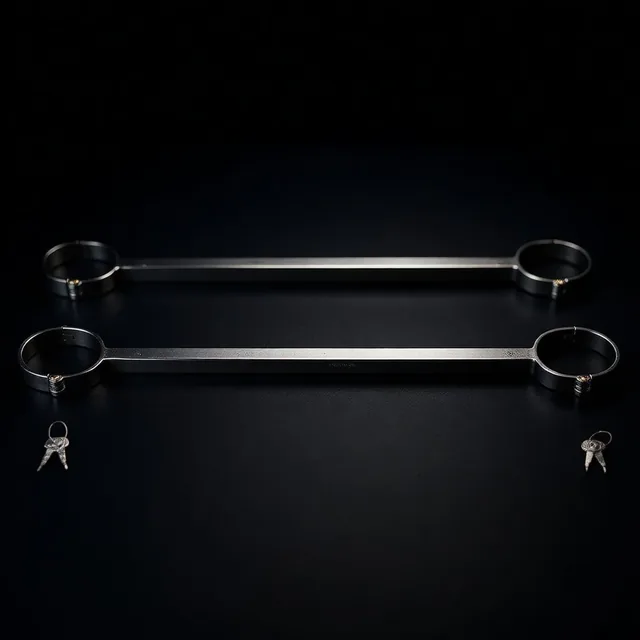
- A rigid bar fixes a stance and refuses to let it change — that is a posture, not a limit. Our Oath ankle set works this way, and rigid vs chain covers the difference properly.
- Mass does neither. It does not stop the ankles coming together; it makes every movement cost something.
You can have all three, but you should know which one you are buying.
The parts of heavy that nobody photographs
Your floor. Five kilograms of steel dropped on tile chips the tile and dings the steel. Heavy pieces want a rug or a bed underneath them during fitting.
Sitting down. Heavy ankle bands press into the opposite leg when you cross your ankles or kneel. That is a comfort issue, not a safety one, but it decides how long a session lasts more often than anything else.
Getting them off. Weight makes fumbling worse. Keys or drivers go somewhere you can find them in the dark, before anything goes on.
Sizing matters more as weight goes up
A heavy band that is slightly loose slides down onto the foot and stops. A heavy band that is slightly tight concentrates its whole mass on a small ring of skin over the ankle bone. Measure the narrowest point just above the ankle, allow one to two fingers, and take the larger size if you are between two — the sizing guide has the method.
What weight is never a substitute for
No amount of mass makes a piece load-bearing. Nothing we carry is rated or intended to carry body weight, hold a person off the ground, or serve as an anchor. Heavy is an experience, not a load rating.
In short
Decide first whether you want restraint by geometry, by rigidity, or by mass — they are three different products. Then look for a published weight in grams rather than the words heavy duty, and measure the ankle before you order. The range is in metal handcuffs, ankle cuffs and leg irons.
The pieces this is about