Journal
Metal Handcuffs vs Police Cuffs: Why Ratchets Are the Wrong Tool
Updated
Search for rigid cuffs or metal handcuffs and the first page is duty gear — ASP, Hiatt, Smith & Wesson. Those are excellent products for the job they were designed to do, and that job is not this one. If you are about to buy a pair because the photographs look serious, this is the difference.
What a ratchet does
Police-pattern cuffs close by a toothed arm ratcheting past a pawl. The design goal is speed: one hand, one motion, applied to someone who does not want them applied. Two consequences follow, and both are deliberate.
They tighten under struggle. A ratchet only goes one way until it is unlocked. Movement, swelling and body weight all walk the cuff tighter, notch by notch. Duty cuffs have a double-lock precisely because this is a known hazard, and officers are trained to set it immediately.
They have a thin bearing surface. The arm is narrow because it has to pass through the frame. All the load sits on a small strip of skin over the radial nerve.
For an arrest lasting minutes, with trained supervision, those trade-offs are acceptable. For anything worn for pleasure, they are exactly wrong.
What a machined band does instead
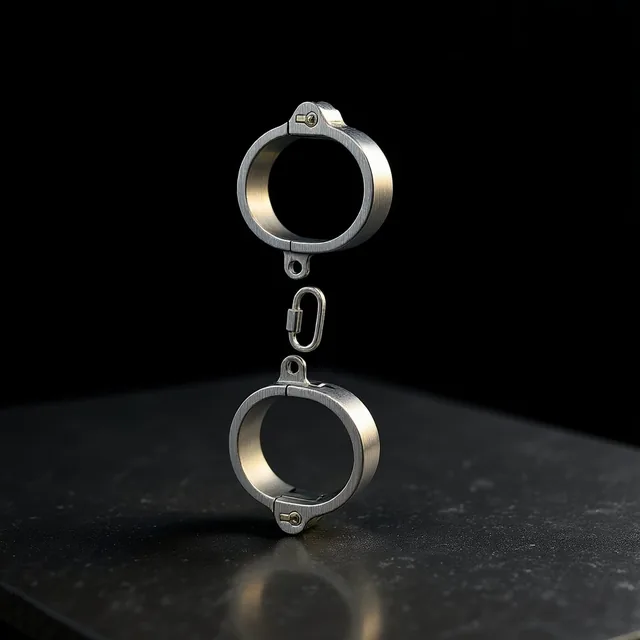
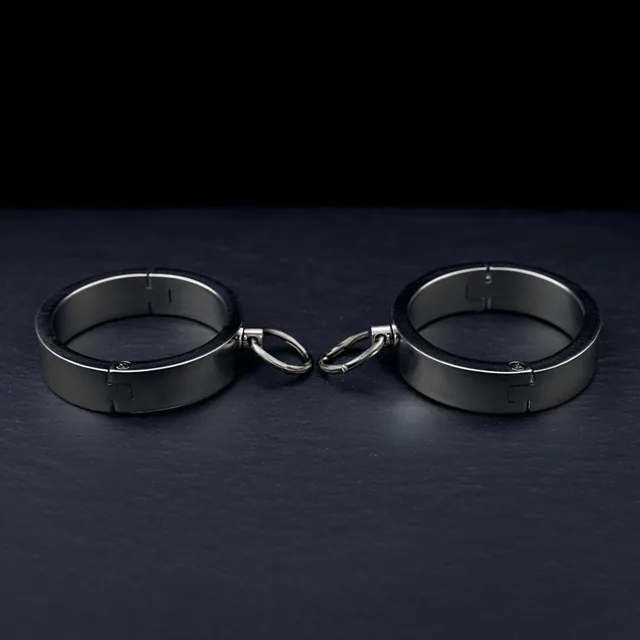
A fixed-diameter band cannot ratchet. It is cut to a size, and it stays at that size whatever happens next. There is no tightening under struggle because there is no mechanism that could tighten. The Oath wrist shackles are oval flat-band cuffs of this type, with the lock machined into the band and a short chain between them.
The trade is that you have to get the size right. Machined steel has no give, so a cuff that is too small is simply too small — see the sizing guide, measure the narrowest part of the wrist, and allow one to two fingers all the way round.
Nerve pressure is the real risk, not circulation
Most people worry about blood flow. The more common injury from badly fitted wrist restraints is nerve compression — usually the radial nerve, from a cuff that has ridden up onto the forearm. It presents as numbness, tingling or a weak grip, and it can outlast the evening by weeks.
Three habits make it much less likely, though none of them is a guarantee. Keep the metal on the narrow part of the joint rather than letting it ride up the forearm. Check in often — actually often, on a timer rather than on a feeling — by asking the wearer what they can feel and by watching colour in the fingers. And stop immediately for numbness, tingling, coldness, weakness, or a hand turning pale or dusky, without waiting to see whether it settles. Nerve pressure in particular can be doing damage while circulation still looks fine, so what the wearer reports matters more than anything you can see.
None of this is medical advice, and we are a shop rather than a clinician. If something has already gone numb and stayed numb, that is a doctor's question, not a forum's.
What to look for in a listing
- Fixed bore, not ratchet. If the photographs show a toothed arm, it is duty gear.
- A radiused inner edge. Look for a photograph of the cuff open. A square edge is a pressure line.
- Lock in the band, not a padlock. A padlock on a wrist swings, catches, and puts a hard lump between the cuff and whatever the arm rests on.
- A stated inner diameter. "One size" on machined steel means somebody has not measured anything.
- Keys and shears within reach, always, and never leave a restrained person alone.
In short
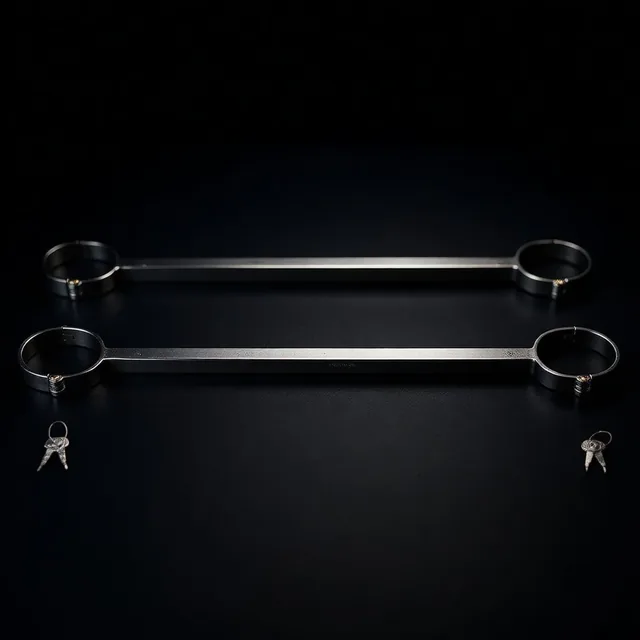
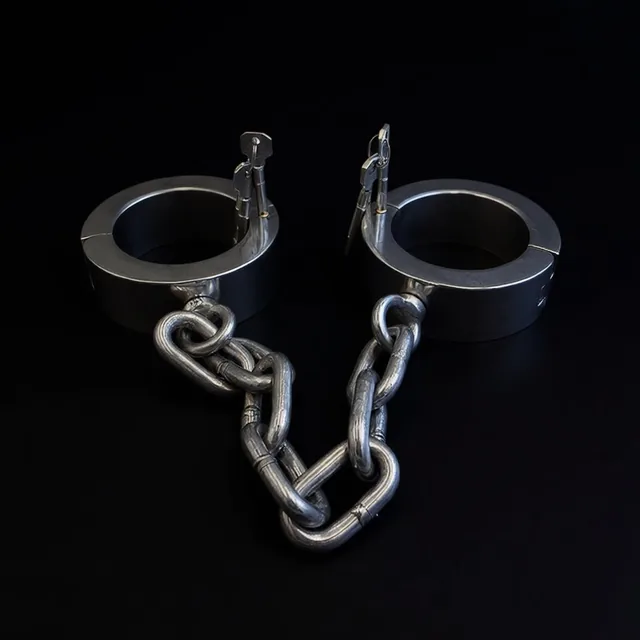
Duty cuffs are built to be applied fast to someone resisting. Machined bands are built to be worn by someone who chose them. Buy the second and measure first. The full cuff range is in metal handcuffs, ankle cuffs and leg irons.
The pieces this is about