Journal
How Heavy Should a Steel Collar Be?
Updated
Weight is the one thing about a steel collar that a photograph cannot tell you, and it is the thing that decides whether you wear the piece or admire it in a drawer. Listings quote millimetres because millimetres are easy to print. What you actually feel is grams, and where they sit.
The honest ranges
Across our own collars the spread runs from about 180 grams to just under a kilogram, and each step in that range is a different piece of clothing rather than a different price point.
These are our own weights. How any of them feels is personal, so treat the descriptions as our impression rather than as a specification.
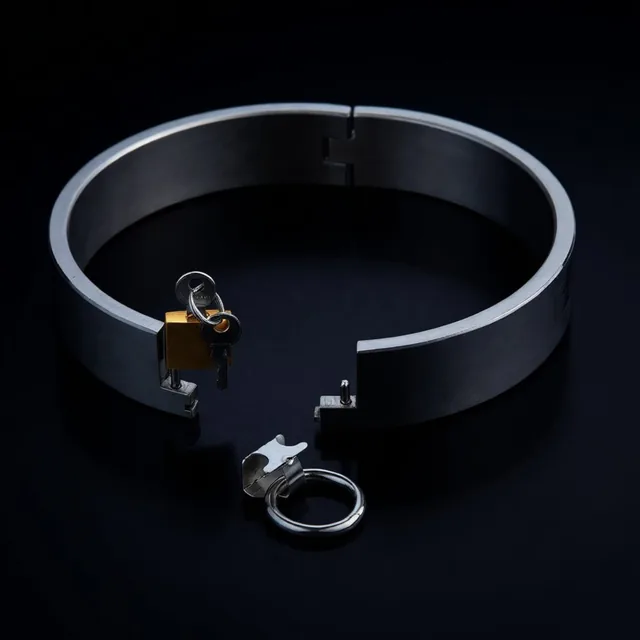
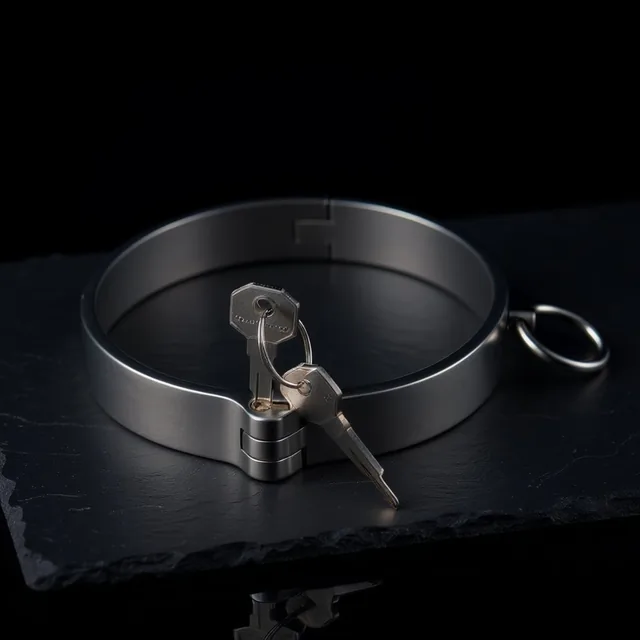
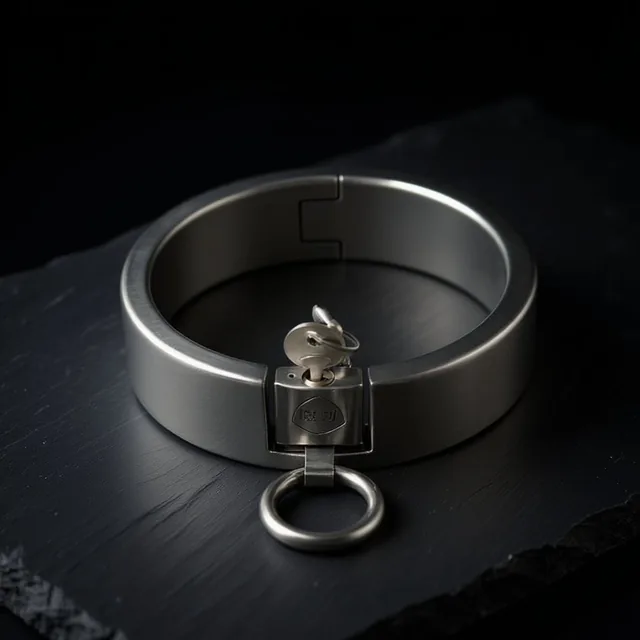
180–320 g. The Eclipse, depending on size — an 11.5 mm round bar that reads as a neck ring rather than as equipment. This is the range that stops competing for attention soonest.
Around 400 g. The Sovereign, a 20 mm flat band: present when you turn your head, unremarkable when you do not.
0.7–0.95 kg. The Regent at roughly 800 g and the Cardinal at 0.7–0.95 kg. Both are felt continuously. That is the intent, and neither pretends otherwise.
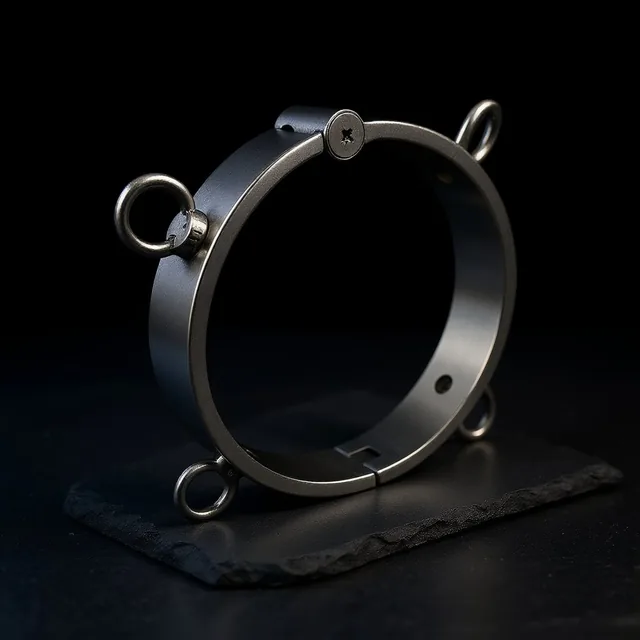
Beyond that. The Bastion runs a 12 mm wall on a 4 cm band. We have not weighed a production sample yet and will not publish a number until we have, but the geometry puts it further along the same line — a piece bought deliberately, worn deliberately.
Where the weight actually rests
A correctly sized collar does not hang on the throat. It rests on the collarbones and the base of the neck, and the soft tissue at the front carries almost nothing. This is why a loose collar is more comfortable than a tight one at the same weight, and why the two-finger clearance rule matters more as the piece gets heavier: a heavy collar that is also snug transfers its mass to exactly the structures that should not be carrying it.
It is also why "how heavy can I wear all day" has no universal answer. Neck length, shoulder slope and how much you move all change the answer more than a hundred grams does.
A test that beats any spec sheet
Put on a wristwatch, then a heavier one. The difference in grams is small; the difference in how often you notice it is not. Collars behave the same way, but at the neck the noticing is constant, because you turn your head hundreds of times a day and the collar answers every time.
If you are choosing your first steel collar, take the lighter option. The heavy one is a purchase you make once you know you want to feel it — and by then you will know exactly how much.
What weight does not buy you
Weight is not strength, and it is not safety. None of our collars — and no collar we know of — is rated to carry body weight, and heaviness has nothing to do with whether a piece is suitable for anything load-bearing. It is not. Nor does weight indicate steel quality: a thick band in a poor alloy is heavier and worse. Grade and finish are covered in 304 vs 316.
In short
Lighter pieces stop competing for attention; heavier ones are felt continuously and bought on purpose. Where your own line falls is something only wearing one will tell you. Measure first, allow two fingers, and if you are choosing between two, the lighter one gets worn more. Browse the range in steel collars.
The pieces this is about