Journal
Collars You Can Wear in Public: What Actually Gets Noticed
Updated
The usual advice — "get a discreet one" — is not advice, because discretion is not a property of the metal. It is a property of the shape, the hardware and the context. Here is what people actually notice, in the order they notice it.
Hardware first, always
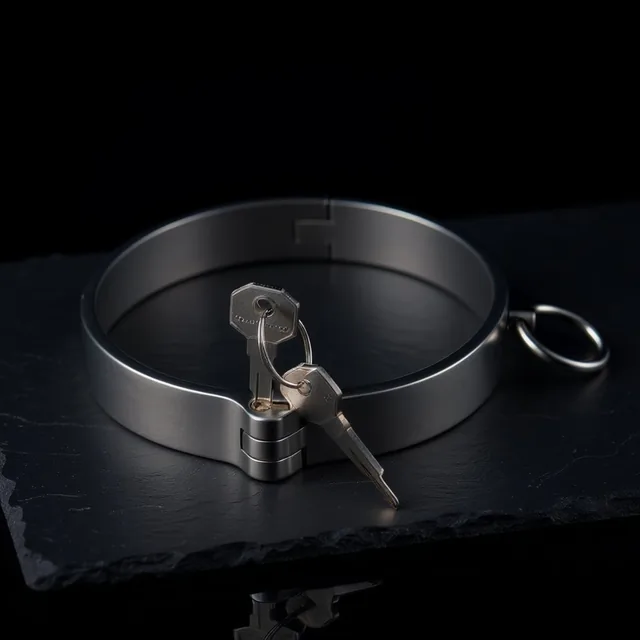
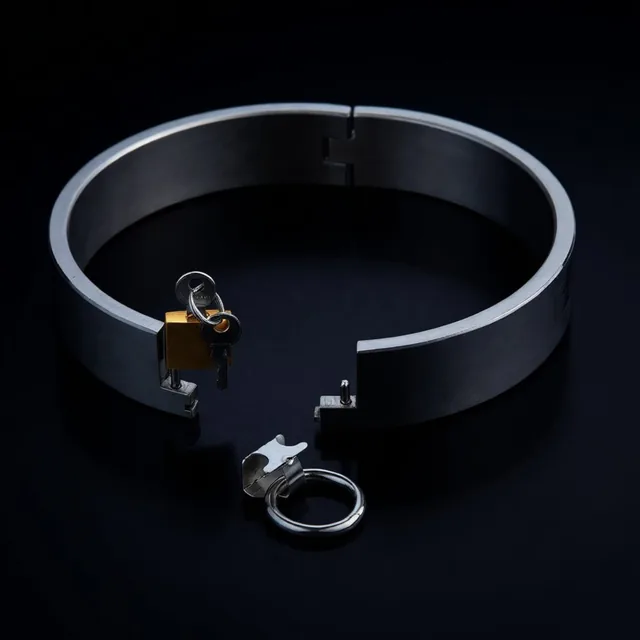
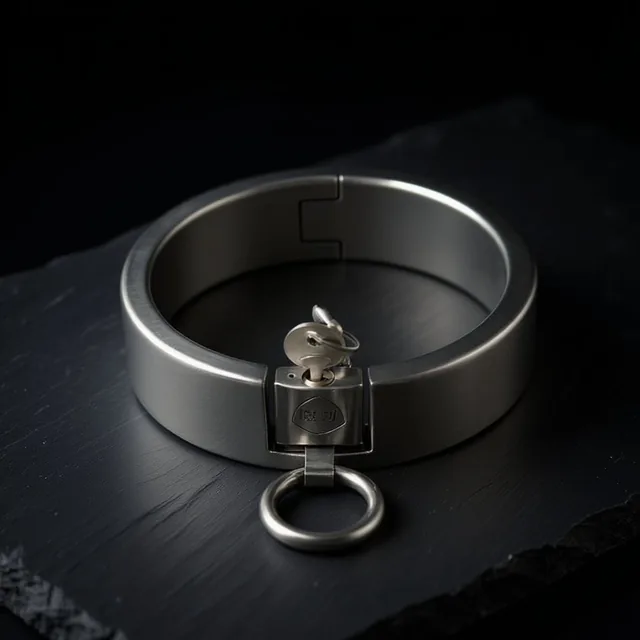
A stranger's eye goes to the lock long before it goes to the band. A padlock hanging at the front of a neck ring is legible from across a room to anyone who has ever seen a padlock. A lock recessed into the band is a small flat face that reads as part of the design. This single choice does more for discretion than any amount of thinning the metal.
Rings are the second thing. A single small ring reads as a pendant loop. Four rings around the band read as equipment, because nothing in normal jewellery has anchor points at the sides and back.
Then proportion
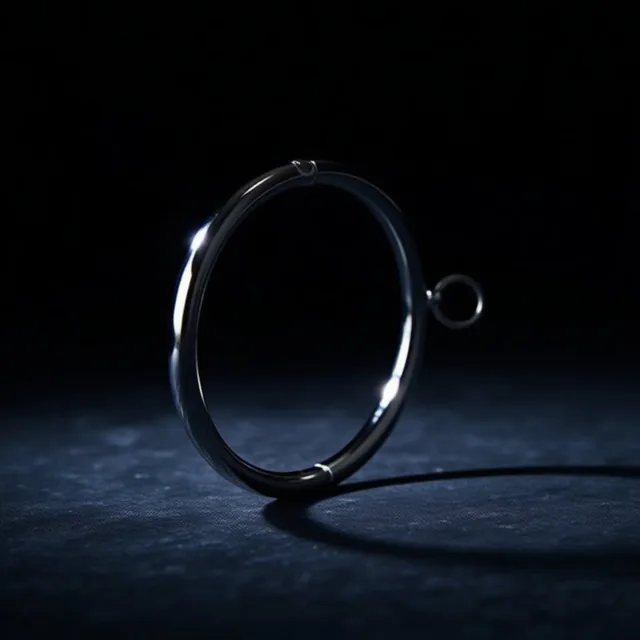
A slim round bar sits in the same visual family as a torc or a rigid choker, both of which are ordinary jewellery. Our Eclipse is 11.5 mm of polished round bar for exactly this reason, and it passes under a shirt collar or a scarf without a shape showing through. Where the line falls is a judgement rather than a rule, and it is ours rather than an industry standard.
A flat band of 20 mm — the Sovereign — is borderline, and honestly so. It reads as deliberate. In most rooms it reads as a design choice; in a room where somebody knows what they are looking at, it reads as what it is.
Anything wider is not a public piece. A 3 cm band with four rings, or a 4 cm band with a 12 mm wall, will be read correctly by anyone who looks twice, and pretending otherwise would be doing you no favours.
Then finish
Polished metal catches light and draws the eye. Brushed metal does not. If you are choosing between two otherwise identical collars for daytime wear, brushed is the quieter one — and it also hides the fine scratches that daily wear puts on any steel.
The two situations people forget
Airport security. A solid steel collar is a lot of metal to be wearing through a checkpoint, and it may well be picked up; whether that leads to a wand, a pat-down or nothing at all depends on the airport and the day. What you can control is being able to take it off: travel with the key — or, for a screw-closed piece, the driver — rather than discovering at the barrier that you cannot.
Medical settings. MRI is the one to think hardest about: metal of unknown composition is generally kept out of the scanner, and a neck ring sits directly in the way of most head and chest imaging. Plain X-ray is usually less strict, though anything over the area being imaged is normally removed. Either way the decision is the department's, not yours, and they will want it off rather than argued about. An emergency department will remove whatever is in the way of treating you, quickly, and will not be waiting for a key from another city. Anything worn long-term should be something a stranger can remove with a tool that is easy to describe over the phone.
A short checklist
Before you buy something you intend to wear out of the house: is the lock recessed or hanging? Is there one ring or several? Is the band slim enough to read as jewellery rather than as hardware? Is the finish brushed? Can it come off with a key or driver you will actually have with you?
Four yeses and you have a day collar. Fewer, and you have a very good collar for somewhere else. The full range is in steel collars, and how the locks differ is covered in choosing a locking collar.
The pieces this is about