Journal
Wall Thickness: The Collar Spec Nobody Prints
Updated
Two steel collars can be the same width, the same diameter and the same finish, and feel like entirely different objects. The difference is wall thickness — how deep the metal is through the band — and it is the one number most listings leave out, because it is the one that costs money.
Width is what you see. Wall is what you feel.
Band height is the dimension you notice in a photograph: a 20 mm band looks like a ring, a 40 mm band looks like a cuff. Band wall is the dimension you notice on the body. It sets the mass, it sets how the edges sit against the skin, and it sets whether the piece has any give at all.
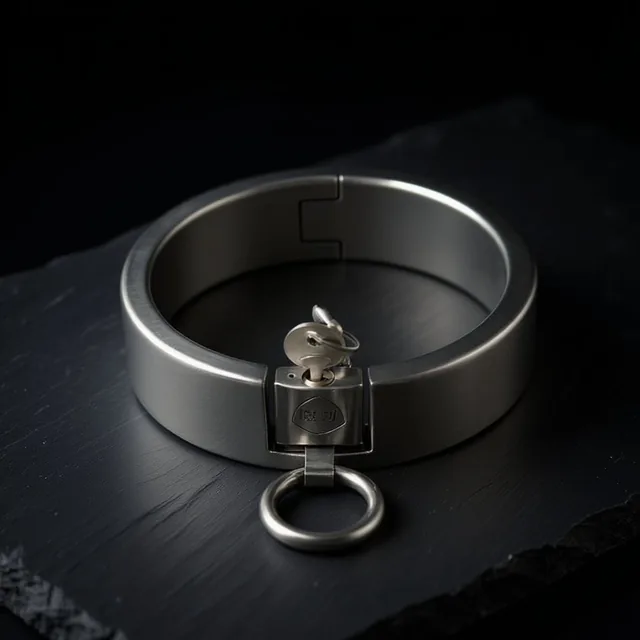
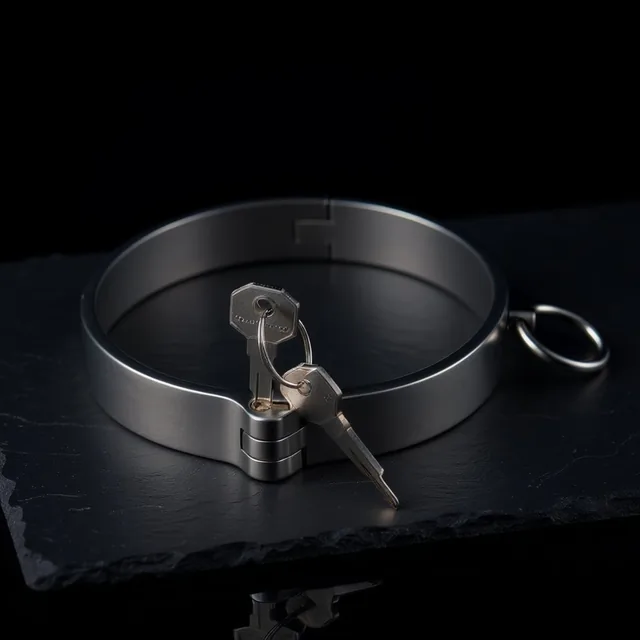
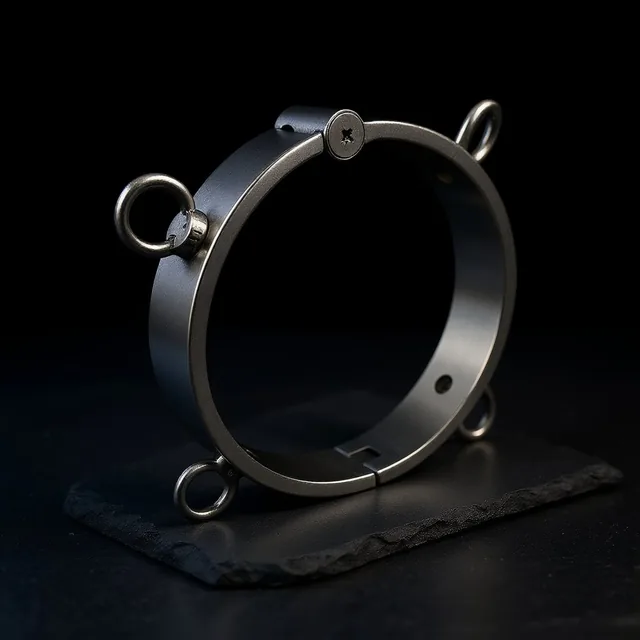
For scale, across our range: the Regent runs 7 mm through the wall. The Bastion runs twelve. That is not a marginal difference — it is nearly double the metal in cross-section, and end-on it is a silhouette rather than a specification.
What a thin wall tends to cost you
A thin band flexes. That is harmless in a decorative choker. On a locking collar it tends to show up in three places:
- The closure. Every flex cycles the hinge and the lock face, and rattle usually arrives long before rust does.
- The edges. There is only so much material to put a radius on, so a thin band is more likely to present an edge to the skin rather than a face.
- Its shape. Steel that flexes under a thumb is easier to bend permanently on a hard floor, and a collar that is no longer round no longer closes true.
More wall gives the maker room to address each of these: material to put a proper radius on, more section around the hinge and lock, and more stiffness against a knock. It is not the only thing that decides them — alloy, heat treatment, hinge design and machining quality all matter, and a thick band made badly is just a heavy bad band. But of the numbers you can actually get out of a listing, wall thickness is the one that correlates.
What thick walls cost you
Honesty runs both ways. A 12 mm wall means:
- No forgiveness on size. A softer collar hides a small measuring error by giving. Solid steel gives nothing. Measure at the base of the neck and allow two fingers — the sizing guide walks through it — and if you fall between sizes, take the larger.
- Real weight. Mass scales with cross-section. A thick collar is a considered purchase, not a first one.
- A shorter list of occasions. A 12 mm wall does not read as jewellery under a shirt collar and was never meant to.
How to check a wall thickness before you buy
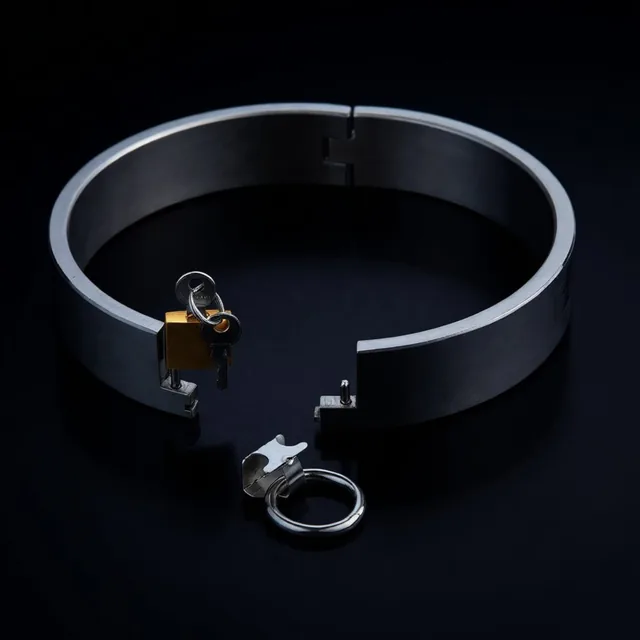
Most sellers will not print it, but you can usually see it. Look for a photograph of the collar open at the hinge or shot end-on. The cut face tells you everything: you can see the wall depth directly, and you can see whether the inner edge has been radiused or just deburred. If a listing shows the piece from every angle except the cut face, that is itself information.
In short
Height is styling. Wall is engineering. Ask for the wall figure, look for the end-on photograph, and remember that thickness buys durability and presence at the cost of forgiveness in sizing. Our thickest is the Bastion at 12 mm; the full range is in steel collars.
The pieces this is about