Journal
What Fifteen Kilograms of Steel Actually Does
Updated
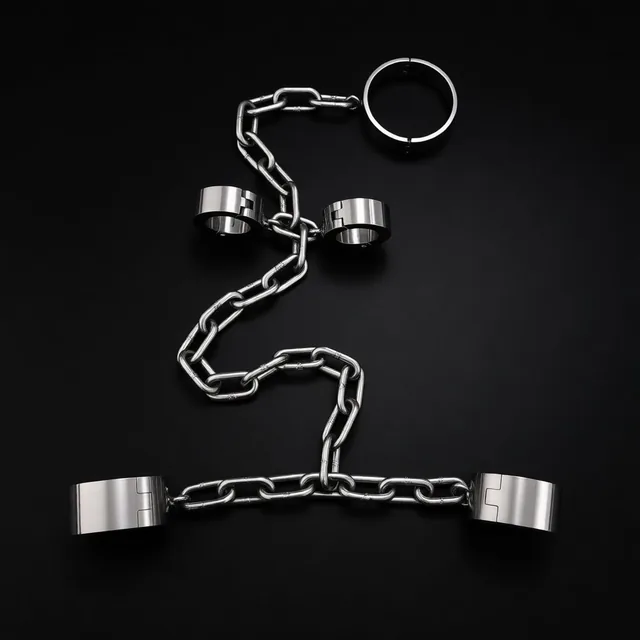
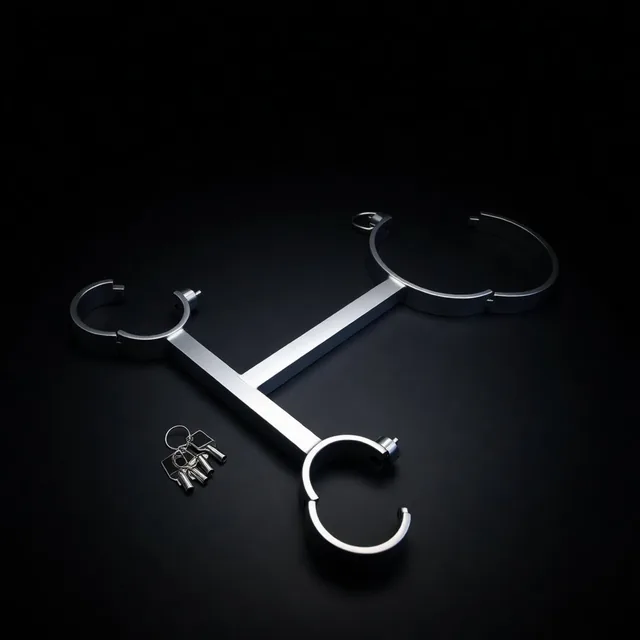
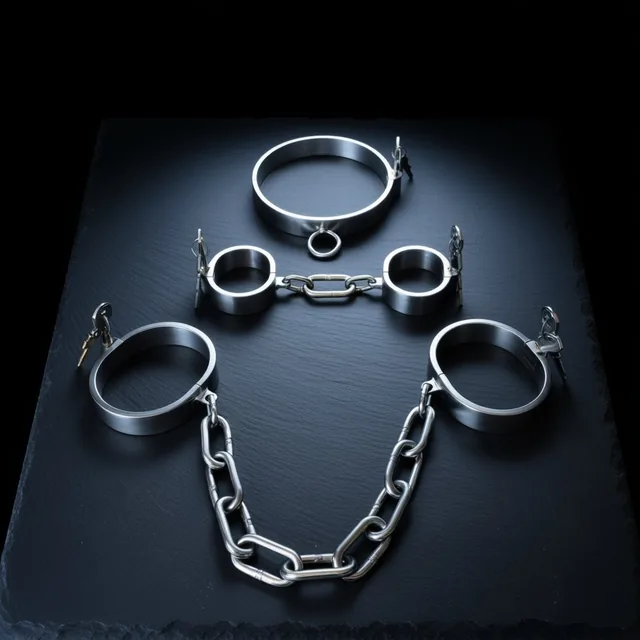
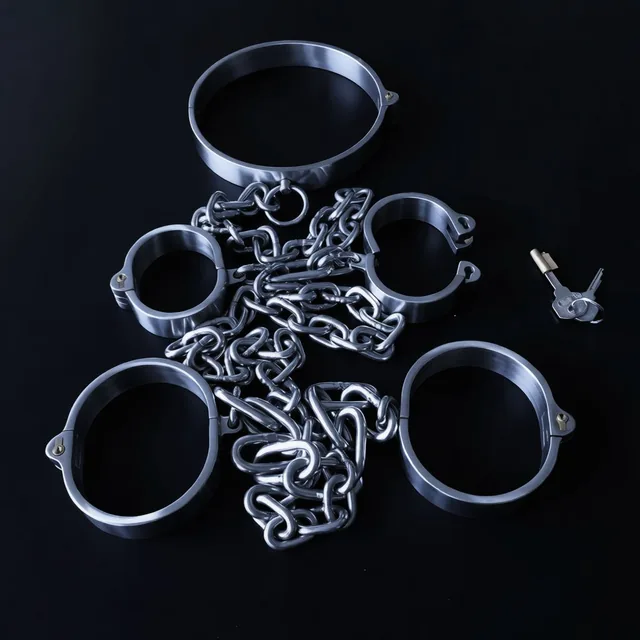
Past a few kilograms, published weights in this category get rare and descriptions get vague. Our Leviathan is about fifteen — collar, wrists, ankles and a bar, chained together. This is what that mass actually changes, written plainly, because at this end of the range vagueness is not a style choice, it is a hazard.
Fifteen kilograms is not "heavier". It is a different category.
To calibrate: fifteen kilograms is about what a large suitcase weighs when you would rather not carry it up stairs — except distributed across a body rather than held in a hand, and not put down when your arm gets tired.
The consequences are not subtle:
Every movement becomes a decision. Not because anything is locked, but because everything costs. Standing up is a project. Shifting position is a plan.
Fatigue tends to be what ends it, rather than restriction. Shoulders and hips carry the load continuously, and in our experience that is what calls time long before anything lighter gear would run into. How quickly it arrives depends entirely on the person, which is why the test below is a test rather than a number.
Getting the wearer out is a two-person job. Fifteen kilograms of connected steel does not come off in a hurry, and a person who is tired cannot help much. This has to be rehearsed rather than improvised.
The honest test for "too heavy"
Not "can they bear it", because that question invites the wrong answer from someone who does not want to disappoint anyone. The test is: can the wearer still change position without help?
If they cannot, that is the ceiling for that person on that day, regardless of what the catalogue says. Bodies vary, and the same person varies by sleep, temperature and how recently they ate.
Things that only matter at this weight
- The floor. Fifteen kilograms of steel dropped during fitting will damage tile, laminate and toes. Fit on a bed or a rug.
- Fitting order. Ankles first, collar last, and reverse for removal. A person already carrying weight on the throat should not then be asked to bend down.
- Temperature. Steel this massive takes a long time to warm and a long time to cool. In a cold room it is genuinely cold for a long time.
- The clock, kept by the other person. The wearer is a poor judge of elapsed time under load. Someone sober keeps the time and calls it.
What it is still not
It is not load-bearing. Nothing about fifteen kilograms of connected restraint makes any part of it rated to suspend a person or carry body weight — the mass is the experience, not a load rating, and the chain and rings are specified for restraint, not lifting.
Who buys this
People who already own connected gear, know exactly how they respond to it, and want the far end. It is bought rarely and remembered afterwards. If you have not yet worn a connected system at a fraction of this weight, that is the purchase to make first — not this one.
The range is in heavy steel bondage sets.
The pieces this is about