Journal
Spreader Bar Kit or Bar Only?
Updated
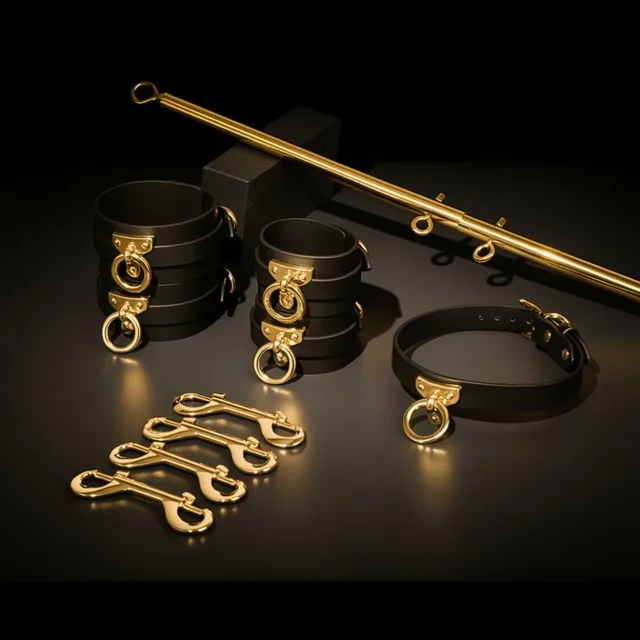
Two listings, near-identical photographs, a €30 gap. One is a bare bar; the other arrives with cuffs and clips. Which is the better buy depends entirely on what is already in your drawer, and the answer is more decisive than the price gap suggests.
Buy the bare bar if you already own cuffs
A bar with plain eyelet rings is the more flexible object. It will take compatible clip-on cuffs, snap hooks or chain. If you already own steel cuffs you like—from this collection or elsewhere—the bar may be the only part you are missing. Confirm connector dimensions before assuming two products fit.
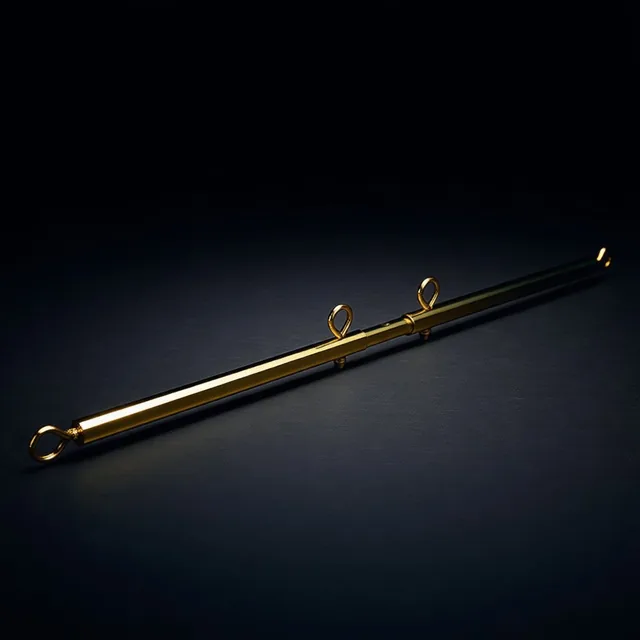
The Vantage is this version: three threaded sections, seven lock positions from 62 to 93 cm, four screw-in eyelet rings, packing down to about a third of its length in a plain carton.
Buy the kit if this is your first bar
A kit removes the two things that go wrong on a first purchase.
Clip compatibility. Cuff D-rings and snap hooks come in a dozen sizes, and a hook that will not pass through a ring is a very quiet way to ruin an evening. Everything in a kit is guaranteed to fit everything else in the kit.
Cuff comfort. A bar exerts a steady outward pull, and that pull lands entirely on whatever is around the ankle. Leather spreads it across a wide band. A bare steel ring concentrates it. For a first bar, leather cuffs are the more forgiving introduction — the Meridian ships with four full-grain leather cuffs and double-ended snap clips around the same polished bar.
The mixed answer most people actually want
Steel cuffs and a bar is a harsher combination than either suggests on its own, because a fixed span plus an unyielding cuff means every adjustment of posture is resisted at a hard point. Many people end up with leather cuffs on the bar and steel cuffs for everything else, which is why kits sell well even to people who own plenty of metal.
What to check before you buy either
- Does it lock, or does it telescope? A friction-fit telescoping bar relies on friction to hold the setting; threaded sections seating on cap nuts give a positive mechanical stop instead. Which one is better made matters as much as which type it is — check the joints before each use either way.
- How does it pack? A bar that does not come apart is a bar you have to hide at full length.
- How many eyelets? Two lets you spread. Four lets you spread and anchor.
- What is the minimum, not the maximum? Every listing advertises the widest setting. The narrow end is the one you will actually start at.
And the usual, which is not boilerplate
Nothing we sell is rated to carry body weight or act as a suspension point, including every ring, eyelet and cap nut on either bar. Keep releases reachable, stay in the room, and set the width narrow to begin with — choosing a spreader bar width covers why. Both bars are in steel leg spreader bars.
The pieces this is about
in Stainless Steel Spreader Bars — Adjustable Leg Restraint Bars